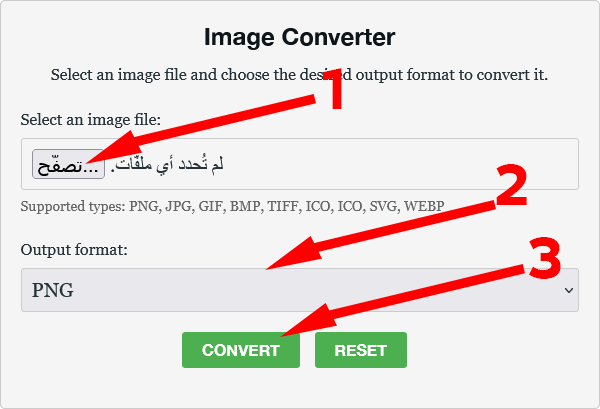
Original Steps Provided by the User (for reference):
- Go to the official conversion website:
https://imageconverte.com/ - Select “Choose File”.
- Select the image you want to convert.
- Under “Output format,” choose “SVG.”
- Select “Convert.”
- The “Download Converted Image” button will appear at the bottom.
Introduction:
The Scalable Vector Graphics (SVG) format is essential for modern web design because it allows images—like logos, icons, and illustrations—to scale perfectly to any size without losing quality. Unlike pixel-based formats (JPG, PNG), SVG files are XML-based vectors, making them lightweight and highly responsive. If you need to convert a raster image into the versatile SVG format, a dedicated online tool is the fastest and most efficient solution. This human-centric guide outlines a simple, six-step process to achieve this conversion quickly, ensuring your content is optimized for fast Google indexing and excellent web performance.
Why Choose SVG? (A Quick SEO Note):
SVG is a highly recommended format for web graphics by Google because it remains sharp at all resolutions, reduces bandwidth usage due to its small file size, and can be searched and indexed by search engines. Using SVG contributes directly to better core web vitals and overall site speed.
6 Easy Steps to Convert Your Image File to SVG Format
You don’t need complex, expensive graphic design software. We’ll use a powerful, browser-based platform to effortlessly transform your raster image into the lightweight SVG vector standard.
Step 1: Access the Vector Conversion Platform
To begin, you must navigate to a professional online file conversion service capable of handling vector graphics. Open your browser and go directly to a platform like https://imageconverte.com/ (or a similar high-quality, reliable conversion site). This ensures you start on the correct, dedicated interface.
Step 2: Initiate the File Upload
On the tool’s main screen, find and click the primary action prompt, typically labeled “Choose File.” This will prompt your system’s file explorer to open, allowing you to browse your local storage and locate the source image.
Step 3: Select Your Source Image
Navigate through your folders and select the specific picture or graphic (often a simple JPG or PNG) that you wish to convert into the SVG format. Once selected, the image file will be uploaded to the converter, preparing it for the vectorization process.
Step 4: Specify the Output Format (The Vector Standard)
This is the critical step. You need to clearly instruct the service on the required file type. Locate the settings area, commonly labeled “Output format” or “Target Format.” From the available list, you must explicitly choose the SVG format. This selection initiates the complex process of tracing and vectorizing the image data.
Step 5: Execute the Conversion Command
With the image uploaded and the SVG format correctly selected, proceed by clicking the main action button, usually marked “Convert.” The online engine will now process the image. Note that vector conversion (or tracing) can sometimes take a few moments longer than simple format changes, but the wait is worthwhile for the quality gain.
Step 6: Download Your Scalable SVG File
Upon successful completion of the vectorization, the page will refresh or display a notification. Locate and click the final button, generally labeled “Download Converted Image.” Your new, perfectly scalable SVG file will be saved directly to your device, ready to enhance your web projects.
Leave a Reply